Profile Picture
Nguyen Tran Trong Nghia — Aerospace Engineering & Mathematical and Theoretical of Aerodynamics
"numerical methods are most meaningful when used to interrogate the consequences of a well-founded physical and mathematical model, a numerical solution may reproduce what the flow does; only a rigorous understanding of the underlying physics can explain why it does so." — N. T. T. Nghia, Core Research Philosophy

Proceedings of CETA 2026: Numerical Investigation

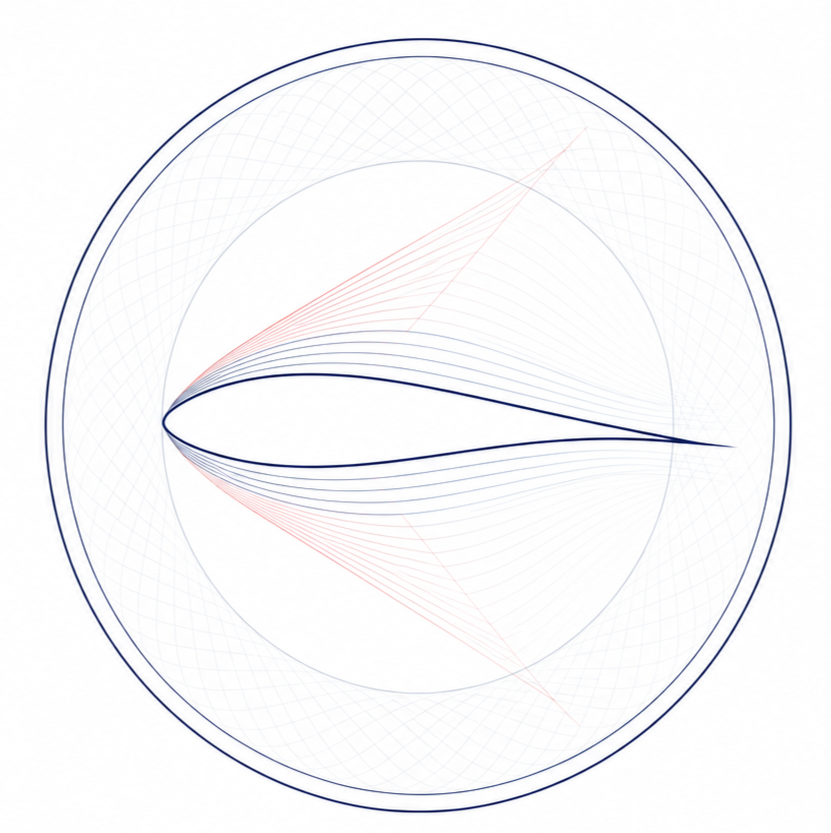
The research paper detailing the investigation of aerodynamic characteristics and shock wave behavior correlated with pressure distributions of the swept-wing has been officially published within the proceedings of the CETA 2026 conference. This numerical investigation addresses the geometric parameterizations of specialized airfoils, specifically evaluating the SC(2)-0410 geometries [p.59].

Analytical approaches were rigorously utilized to validate the numerical solutions extracted from Finite Volume Methods (FVM), executing discrete governing equations across computational platforms such as Ansys Fluent and SU2.


Mathematical Rigor in Computational Fluid Dynamics

A critical evaluation of contemporary engineering practices reveals a concerning over-reliance on automated graphical interfaces. True analytical capability within Aerospace Engineering requires a fundamental understanding of the governing discrete equations. Operating simulation software without comprehending the underlying physics reduces the engineer to a mere "button pusher."

The core objective of ongoing academic training is to deconstruct the mathematical nature of Finite Volume Methods (FVM). By analyzing parameters through foundational calculus and fluid mechanics, numerical models generated via algorithms can be independently verified, ensuring absolute technical accuracy in high-speed flow prediction.


Interdisciplinary Research: Sustainability and Material Science

Academic engagement extends beyond computational and theoretical aerodynamics into interdisciplinary material science. Prior collaborative projects under the supervision of Dr. Le Dinh Hieu at the Johns Hopkins University involve the exploration of 'Mo Cau' the preservation and structural viability of 'Mo Cau' as a green material alternative, demonstrating the necessity of integrating cultural symbols with empirical material science paradigms.


Physical Conditioning: Muay Thai and Kickboxing

Rigorous academic pursuits demand proportional physical discipline. Competitive engagement as an athlete in Muay Thai and Kickboxing provides an essential counterweight to the intense mental focus required for computational fluid dynamics research.

The physiological demands and strategic mechanics of combat sports cultivate resilience, highly structured routines, and a direct application of biomechanical principles, ensuring sustained focus in high-pressure academic environments.